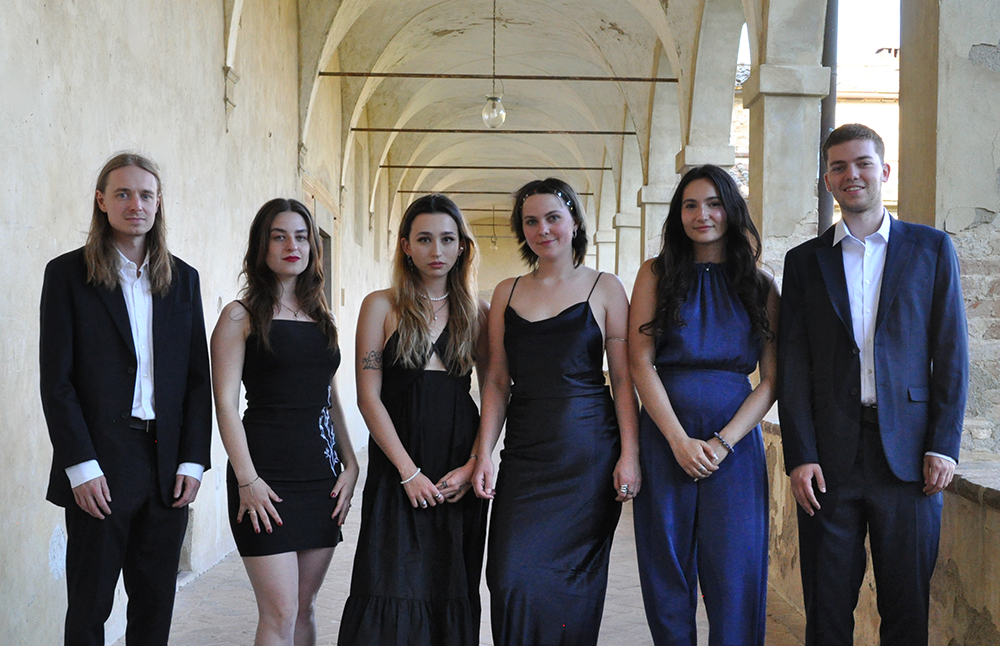
Certosa di Pontignano in Siena, Italy
Social media algorithms often capture our attention by pushing negative news that evoke outrage or fear – emotions closely tied to our perception of bodily signals. Recent findings suggest that the perception of our own bodily signals, an ability termed interoception, might be a protective factor against the negative impact of politics on health. In this study we aim to replicate this finding in a European sample and to investigate whether this protective effect extends to social media contexts. We focus on different social media behaviors, such as time spent online, political engagement, and doomscrolling. Furthermore, our study addresses the generalisability of protective effects of interoception on health to Europe, and it helps us understand the intricate relationship between interoceptive sensibility, impact of politics, and social media behavior.

Team

Supervisor: Markus Tünte
Communication Officer, Research Manager: Rebeka Kalinova
Data Analyst: Marcelina Francuz
Chief Editor: Florens Gossens
Literature Lead: Candela Carrera
Measurement Specialist: S. Charlotte Masak
jSchool 2024

Call for student applications is open!

Learn more about jSchool and how to apply:

Days
Hours
Minutes
Seconds